Basic German Words for Beginners
Learning a new language can feel overwhelming, but starting with the basic German words for beginners makes the journey much easier and more enjoyable. German is one of the most widely spoken languages in Europe and offers numerous opportunities for education, travel, and career growth.
In this guide, you will explore German vocabulary for beginners, including common German phrases and simple German words that are essential for everyday communication. Whether you’re planning to travel to Germany or aiming to learn German basics for academic or professional purposes, this article will help you take your first step with confidence.
Why Learn German Basics?
Before diving into vocabulary, it’s important to understand why learning German is beneficial.
1. Widely Spoken Language
German is the most spoken native language in Europe, used in countries like Germany, Austria, and Switzerland.
2. Career Opportunities
Germany has one of the strongest economies in the world. Knowing German can open doors to careers in engineering, healthcare, tourism, and international business.
3. Academic Advantages
Many German universities offer free or low-cost education, making it a popular destination for international students.
4. Cultural Enrichment
Learning German allows you to explore rich literature, music, and history in their original language.
Basic German Greetings
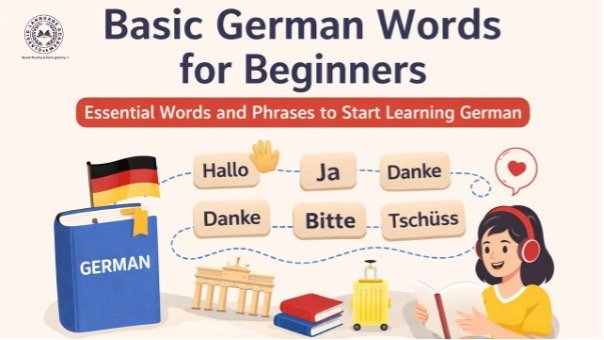
Greetings are the first step in any conversation. Here are some simple German words used in everyday interactions.
| English | German | Pronunciation |
| Hello | Hallo | HAH-loh |
| Good morning | Guten Morgen | GOO-ten MOR-gen |
| Good afternoon | Guten Tag | GOO-ten TAHK |
| Good evening | Guten Abend | GOO-ten AH-bent |
| Goodbye | Auf Wiedersehen | OUF VEE-der-zay-en |
| Bye (informal) | Tschüss | CHOOS |
These greetings are essential when you start to learn German basics and help you make a positive first impression.
Common German Phrases for Everyday Use
Learning common German phrases helps you communicate effectively in daily situations.
| English | German | Pronunciation |
| How are you? | Wie geht es Ihnen? | VEE gayt es EE-nen |
| I am fine | Mir geht es gut | Meer gayt es goot |
| Thank you | Danke | DAN-kuh |
| Thank you very much | Vielen Dank | FEE-len DAHNK |
| You’re welcome | Bitte | BIT-tuh |
| Please | Bitte | BIT-tuh |
| Excuse me | Entschuldigung | Ent-SHOOL-dee-goong |
| Yes | Ja | Yah |
| No | Nein | Nine |
| Do you speak English? | Sprechen Sie Englisch? | SHPREK-hen zee ENG-lish |
These phrases form the foundation of German vocabulary for beginners and are extremely useful in real-life conversations.
Numbers in German
Numbers are another essential part of basic German words for beginners, especially for shopping, travel, and telling time.
| Number | German |
| 0 | Null |
| 1 | Eins |
| 2 | Zwei |
| 3 | Drei |
| 4 | Vier |
| 5 | Fünf |
| 6 | Sechs |
| 7 | Sieben |
| 8 | Acht |
| 9 | Neun |
| 10 | Zehn |
Once you master these numbers, you can easily build higher numbers and use them in everyday situations.
Basic German Words for Daily Conversations
Here are some simple German words categorized for easy learning.
Family Members
| English | German |
| Mother | Mutter |
| Father | Vater |
| Brother | Bruder |
| Sister | Schwester |
| Friend | Freund/Freundin |
Food and Drinks
| English | German |
| Water | Wasser |
| Bread | Brot |
| Milk | Milch |
| Coffee | Kaffee |
| Tea | Tee |
Days of the Week
| English | German |
| Monday | Montag |
| Tuesday | Dienstag |
| Wednesday | Mittwoch |
| Thursday | Donnerstag |
| Friday | Freitag |
| Saturday | Samstag |
| Sunday | Sonntag |
These categories help beginners systematically learn German basics and build their vocabulary efficiently.
How to Introduce Yourself in German
Introducing yourself is a key skill when learning a new language. Here’s a simple structure using common German phrases:
German:
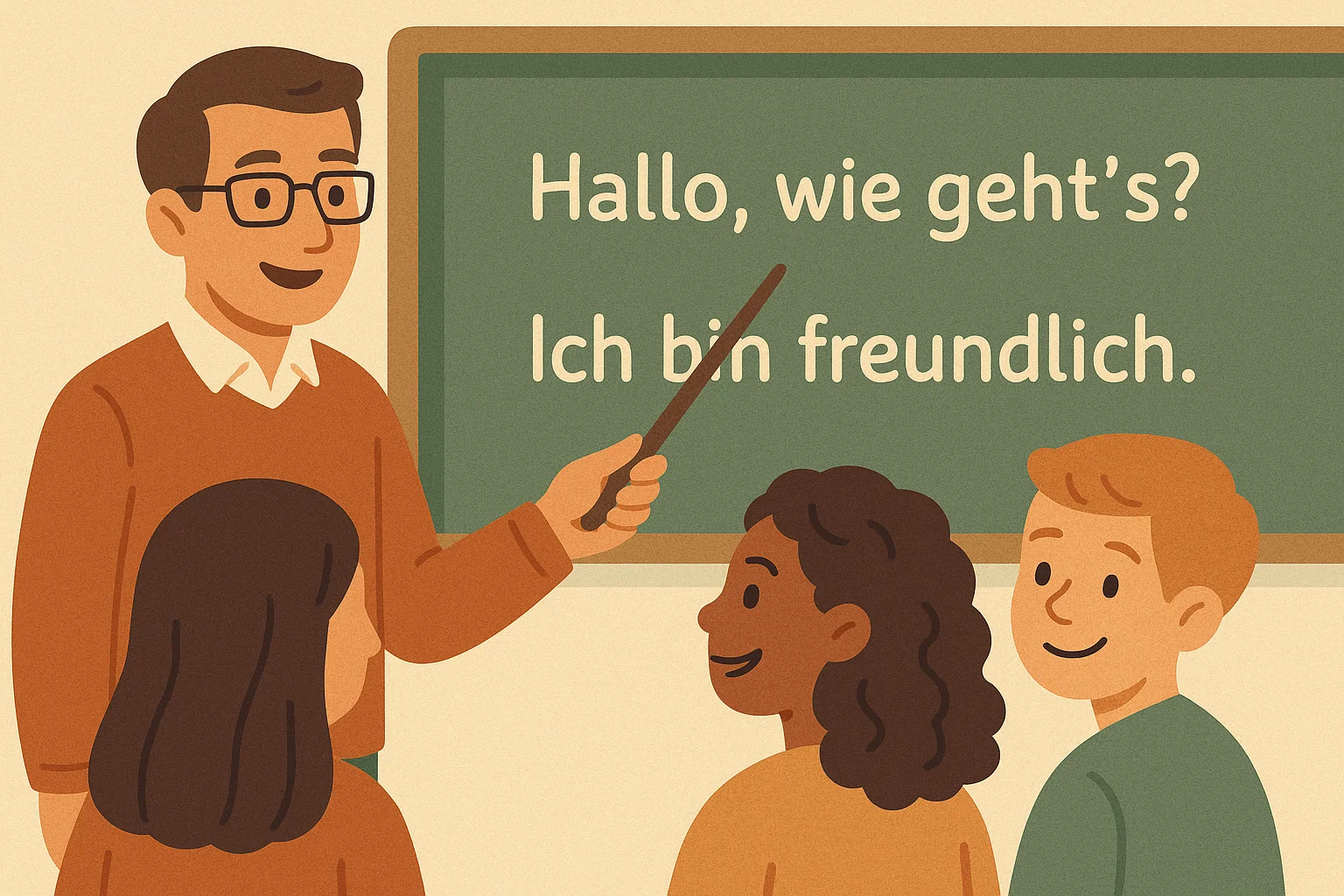
- Hallo, ich heiße Rahul.
- Ich komme aus Indien.
- Ich bin Student.
- Ich lerne Deutsch
English Translation:
- Hello, my name is Rahul.
- I come from India.
- I am a student.
- I am learning German
Practicing these sentences will boost your confidence in speaking German.
Tips to Remember German Vocabulary for Beginners
1. Practice Daily
Consistency is key. Spend at least 15–20 minutes each day revising basic German words for beginners.
2. Use Flashcards
Flashcards are effective for memorizing simple German words and phrases.
3. Watch German Media
Listening to German songs or watching movies helps improve pronunciation and comprehension.
4. Speak with Native Speakers
Engaging in conversations enhances your confidence and fluency.
5. Enroll in an Online Course
Structured learning from experts can significantly speed up your progress.
Common Mistakes Beginners Should Avoid
1. Ignoring Pronunciation
German pronunciation is systematic, so learning it early is beneficial.
2. Translating Word by Word
German sentence structure differs from English, so avoid direct translations.
3. Not Practicing Speaking
Speaking regularly is essential to mastering German vocabulary for beginners.
Benefits of Learning Basic German Words
- Improves travel experiences
- Enhances career opportunities
- Facilitates higher education in Germany
- Boosts cognitive skills
- Enables cultural understanding
Mastering common German phrases is the first step toward fluency.
Frequently Asked Questions
1. How many German words should a beginner learn?
A beginner should aim to learn 500–1000 essential words to communicate effectively.
2. Is German difficult for beginners?
German is considered moderately difficult, but learning simple German words makes it much easier.
3. How long does it take to learn German basics?
With regular practice, beginners can grasp the basics within 2–3 months.
4. What is the best way to learn German vocabulary?
Using flashcards, mobile apps, and structured courses are effective methods.
5. Can I learn German online?
Yes, many institutes offer flexible online courses with certification.
Conclusion
Learning basic German words for beginners is the first and most important step toward mastering the language. By understanding German vocabulary for beginners, practicing common German phrases, and using simple German words in everyday conversations, you can quickly build confidence and communication skills.
Consistent practice and structured guidance will help you learn German basics efficiently. Whether your goal is travel, education, or career advancement, starting with these foundational words and phrases sets you on the path to fluency.